
One beauty parlor’s surrender, one knife that became a dairy farm, and twenty-one leaders in training reveal what happens when disciples become producers — and producers become planters.
Across Bangladesh this May, ordinary entrepreneurs were handing their businesses over to God — and God was using those businesses to plant His church. This is the heartbeat of Business for Movements: the Church and the marketplace aren’t two separate callings. They’re twin engines of one mission. One makes disciples. The other funds, feeds, and sustains them. This month, Bangladesh showed us what happens when both engines run together — starting with a woman who decided to kneel.
The Training Behind the Movement
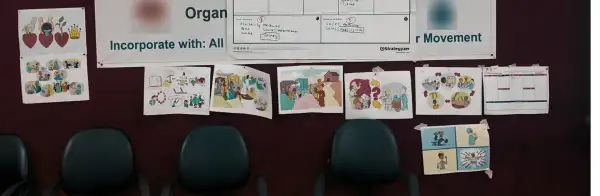
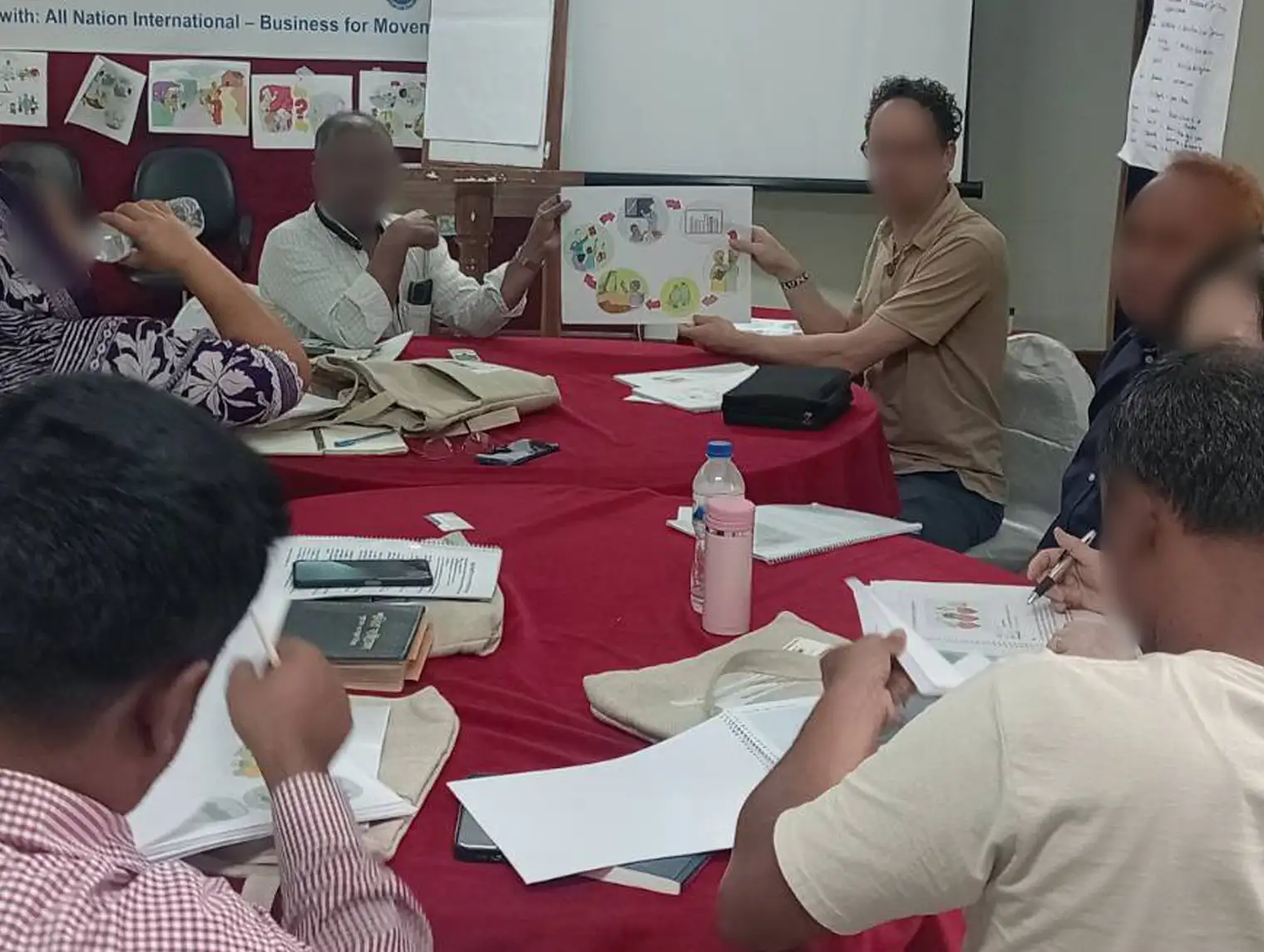
From 3–7 May 2026, twenty-one leaders gathered at a regional training center in the south of Bangladesh for five intensive days of the Pioneer Business Planting (PBP) Facilitators Training, hosted by a local partner ministry in collaboration with our international team. The room held an unlikely mix: business owners, evangelists, pastors, contractors, furniture makers, restaurant owners, beauty entrepreneurs, pharmacists, caterers, hotel operators, and home-church leaders — sixteen men and five women, drawn from towns across the country. All of them worked through the same curriculum: the biblical foundation of business, marketplace ministry, servant leadership, business planning and budgeting, coaching and mentoring, savings groups, and how to multiply what they’d learned into others.
The first three days covered the core training for the whole group. Many had already taken the material online, but sitting face-to-face revealed how much still hadn’t clicked — so the trainers slowed down, reworked exercises, and let people wrestle with real business plans instead of theory. By the final two days, six participants had shown enough leadership, teachability, and Kingdom conviction to be pulled aside for Facilitator Development Training — an intensive track in coaching, public speaking, feedback, and evaluation, meant to prepare them to lead Pioneer Business Planting trainings of their own. One of them spent the week wrestling with the idea that his business wasn’t a “secular” block of his life at all, but active ministry — a chance to love customers, bless his community, and push back against spiritual darkness. By the end of the week, he stood up and spoke a bold mission statement over his own family. He was one of the six chosen to step into a developing-facilitator role.
The week closed the way it opened: with the Lord’s Supper, prayer, and a commissioning over the six new developing facilitators. Two days later, the same momentum carried into a Healing Power Seminar (8–9 May) at a partner church, where local believers studied the biblical foundations of healing ministry and practiced praying for one another. It wasn’t a separate event bolted onto the training — it was the same conviction in a different room: God moves through ordinary, willing people, whether they’re holding a business plan or laying hands on someone in pain.
None of the twenty-six businesses across our network — including the ones you’re about to read — launched this month; that’s by design. Most of this May’s twenty-one participants are still finalizing their business plans, with startups expected to begin in July and the first new churches and disciple-making groups projected by December. Rahim, Amira, and Selina aren’t just stories from the past. They’re the picture of what this new group of leaders is being trained to become.
The Beauty Parlor That Surrendered
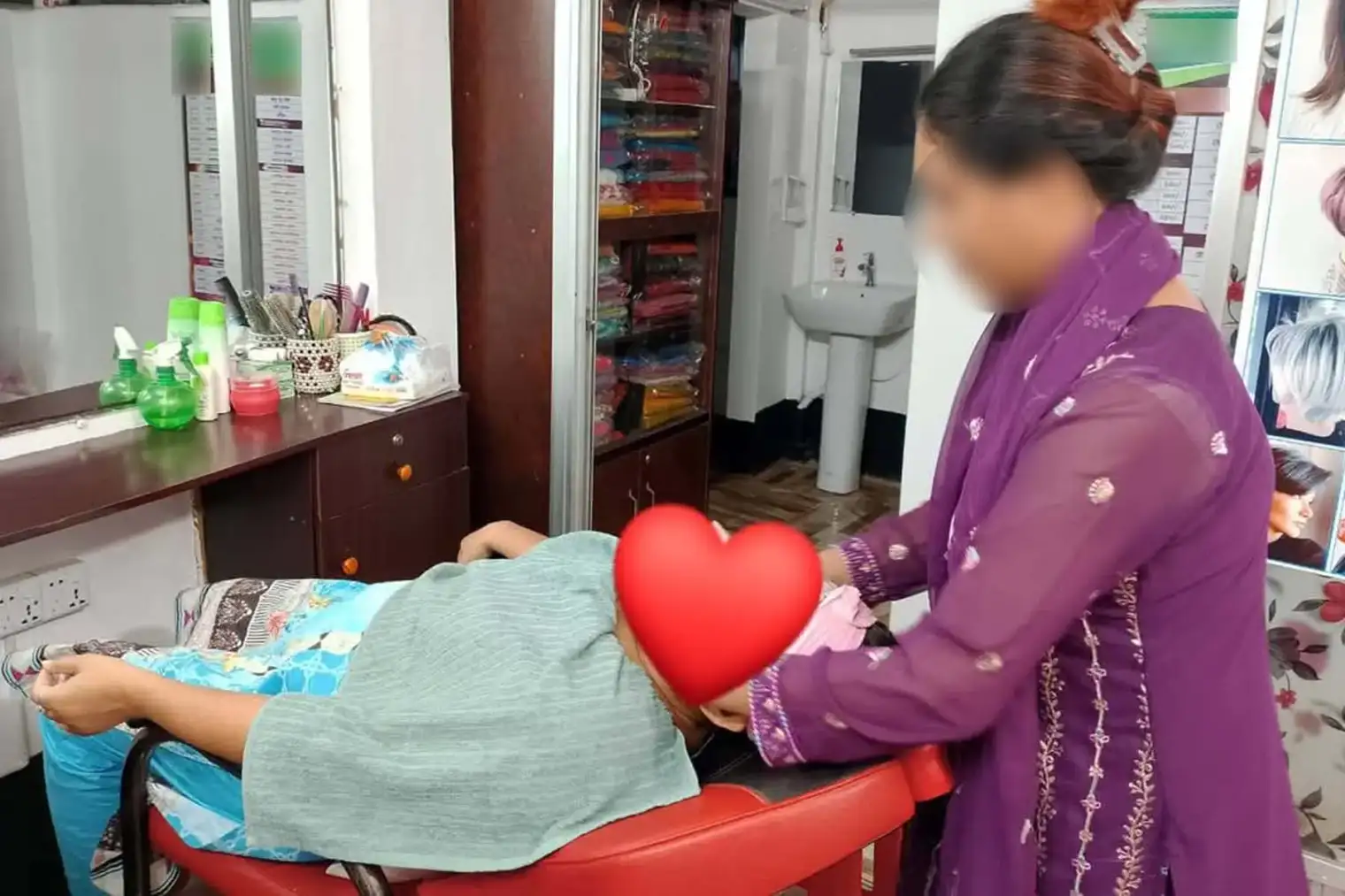
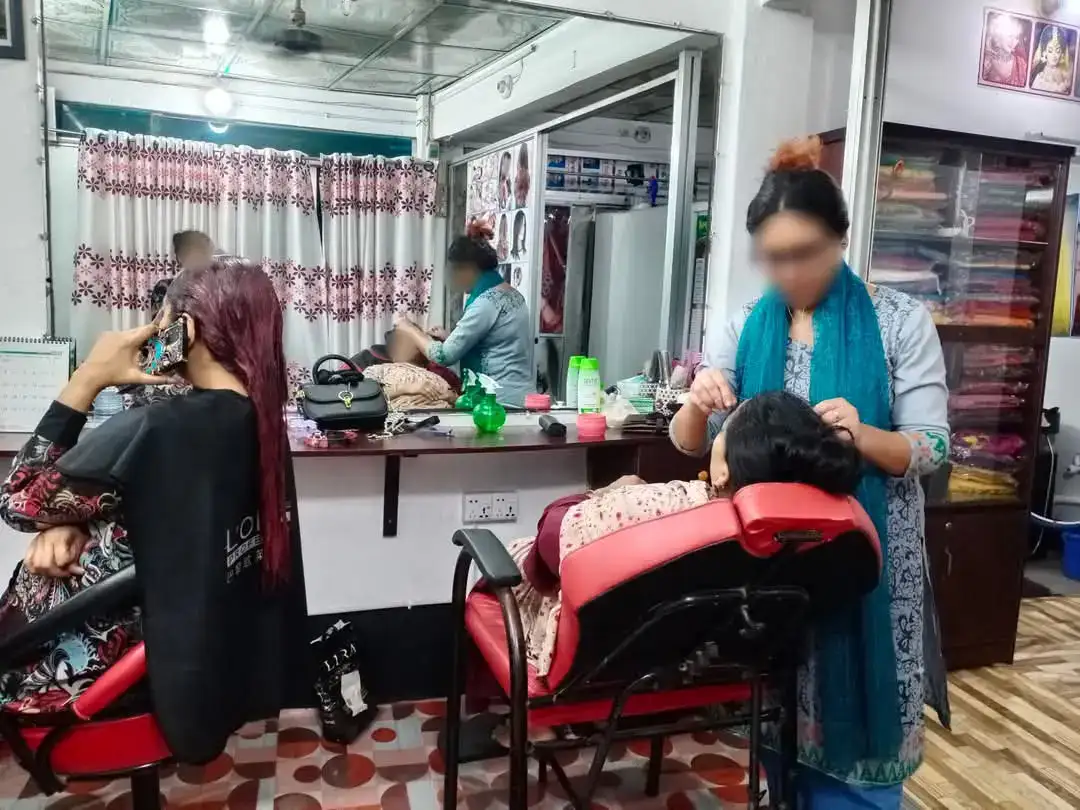
In a suburb near the capital, a woman we’ll call Amira runs a beauty parlor. After her first business training with our team, she held back — running her shop her way, faith kept politely in a separate box. Then one day, everything changed. She called her coach and said simply: she had surrendered her business to God.
What followed was tangible. Amira received a loan to add a room and expand her shop. Business grew. She received a second loan to open a cosmetics shop. She paid back her first loan in full. One decision to hand her shop to God turned into two thriving storefronts — and a track record of faithfulness that builds trust for the next entrepreneur waiting for a chance.
Amira’s growth didn’t stop at two storefronts. She has since gone on to become a trained Facilitator herself — someone now equipped to walk other entrepreneurs through the very surrender that changed her business.
One Knife. One Dream. One Different Man.
Not every surrender in this movement starts with a phone call to a coach. Some start at knifepoint.
A young man stood with a blade in his hand, ready to silence a stranger from South Africa — a traveling disciple of Billy Graham who wouldn’t stop talking about Jesus. That night, instead of taking a life, he saw one transformed: his own. Jesus appeared to him in a dream. He woke up a different man.
Today, that man — we’ll call him Rahim — runs a dairy farm and training center in the southern part of Bangladesh. Ten house churches meet under his leadership. His story sounds like a movie script. But across Bangladesh this May, quieter versions of it were playing out in beauty parlors, fruit stalls, tailoring counters, and dental repair shops.
From a Knife to a Dairy Farm
Rahim’s turning point didn’t come from a sermon — it came from a vision he never asked for. Since then, he’s built more than a business. His dairy farm has become a training ground for new believers, and his home a hub for ten house churches meeting across the region. He’s still married to a wife who hasn’t yet followed him into faith — a daily reminder that transformation is a process, not a single moment, and that these stories rarely end with a tidy bow.
Not every story in this movement moves in a straight line toward blessing, though — some cost far more before they bear fruit. Continue to the second blog post, “The Cost of Courage — and Five Ordinary Trades Turned Extraordinary,” to meet the woman who paid the highest price of all, and the ordinary trades multiplying alongside her.
Actionable Takeaways
- Surrender first, strategy second. Amira’s growth didn’t start with a better business plan — it started with a decision to hand her shop to God. Ask what part of your work you’re still holding back.
- Coaching multiplies outcomes. A 92% repayment rate after two years, and a training week that reworked lessons in real time until they landed — neither happens without someone staying in the room past the workshop.
One Thread in a Larger Tapestry
Rahim’s dairy farm feeds his house churches. Amira’s beauty parlor funds her family and her testimony. And this May, twenty-one more leaders sat in a training room learning to do the same thing on purpose. This is the pattern Business for Movements exists to multiply: disciples become producers, producers become funders, funders become planters, and planters make more disciples.
We’re standing on a road toward planting 1,000 churches and 1,000 businesses by the end of 2028. Twenty-six businesses, a growing cluster of house churches, and a fresh class of six developing facilitators in Bangladesh are one thread in that tapestry — one country, one training week, one beauty parlor that decided to kneel. Multiply that across every nation where our partners are working, and you start to see what the whole picture is meant to look like.
Your Next Step
You don’t have to travel to Bangladesh to be part of this.
Somewhere in Bangladesh right now, another business owner is deciding whether to keep their shop to themselves or hand it over to God. What they decide next could plant a church nobody’s expecting yet.
- Pray — for Amira’s continued growth, for Rahim’s wife to encounter the same Jesus who found him in the dark, and for the six new developing facilitators as they step into their first trainings.
- Partner — training centers like this one run on printed manuals, participant workbooks, and travel and lodging support for leaders who can’t afford to get there on their own; several invited participants missed this training for exactly that reason. Give toward the next round of training, explore ongoing partnership, or consider one-time giving.
- Reply to this newsletter and tell us which story moved you — we’d love to hear it.
Continue the story — read the second blog post, “The Cost of Courage — and Five Ordinary Trades turned extraordinary,” to meet the woman whose faith cost her everything, and the ordinary trades multiplying this movement further.